
What structured approvals is
Structured approvals is a premium feature for decision-making processes in Decisions that allows teams to require approval from specific roles before a decision becomes final.
It is designed for teams that need more control and clarity around how decisions are approved and finalized. Teams can structure approvals using established frameworks such as RAPID and RACI, or define a custom approval framework that fits how they already work.
This helps teams apply governance in a clear and structured way as part of their decision-making process.
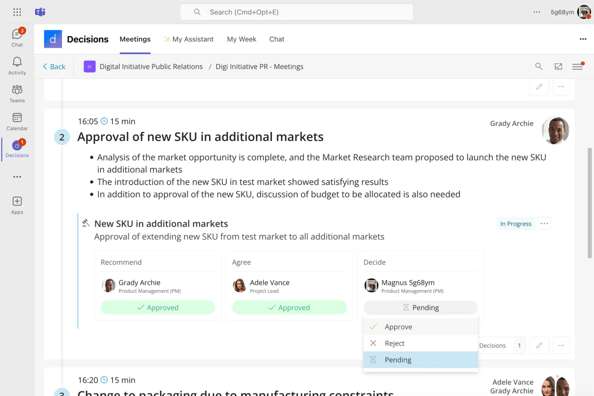
How structured approvals works
With structured approvals, teams can:
-
create proposed decisions on draft or published agendas
-
assign approval roles within the decision-making team
-
structure approvals using RAPID, RACI, or a custom framework
-
require approvals before the decision becomes final
-
complete approvals between meetings when needed
Approvals are recorded as part of the decision process, giving the team a clear view of how the decision moved from discussion to final outcome.
Decisions and approval status can also be included directly in the minutes documentation. Finalized decisions continue to live in the team’s shared decision log, making them easy to revisit over time.
Who structured approvals is for
Structured approvals is useful for teams that want a more formal and accountable approval process around decisions.
Typical examples include:
-
steering committees
-
governance teams
-
board committees
-
finance or risk-focused teams
-
other teams that use defined approval roles in decision-making
It can be especially valuable for teams that already work with RAPID, RACI, or another formal approval model and want to bring that structure directly into Decisions.
Why teams use structured approvals
Teams use structured approvals when they want to:
-
make approval responsibilities clear
-
document who approved a decision
-
support decisions that need approval after the meeting discussion
-
strengthen traceability and accountability
-
keep decisions and approvals in one shared workflow
This is especially useful when it is important to document not only what was decided, but also how it became final.
In organizations with stronger governance requirements, it may also be relevant for governance teams or management to get a shared overview of logged decisions through Advanced Reporting, which provides a read-only view of decisions and meeting outcomes across shared teams for approved users.
Common use cases
Governance-focused decision-making
Support teams that need approval roles as part of how decisions are finalized and documented.
Applying RAPID or RACI in meeting decisions
Use established approval frameworks directly in Decisions.
Approvals between meetings
Allow decisions to move forward between meetings while keeping the approval path visible and documented.
Cross-team visibility for oversight
Where relevant, approved leadership, governance, or compliance stakeholders can use Advanced Reporting to get read-only visibility into logged decisions and meeting outcomes across shared teams. Learn more: Advanced Reporting: what it is and how it works.
How to get more information or request access
Structured approvals is a premium feature.
To get the conversation started, send us an email at - support@meetingdecisions.com.