
Looking for a specific meeting type? View our other popular guides:
Project Meetings
Leadership and Management Meetings
Board and Committee Meetings
Download Decisions


Before starting with Decisions, add the Decisions plug-in to Teams: Add Decisions to Microsoft Teams
Access meeting agenda (request access if needed):
Reading the agenda ahead of the meeting helps you show up prepared and makes the discussion more efficient. You can quickly understand the purpose of the meeting, spot where your input is needed, review any linked documents in advance, and flag questions or risks early, so the meeting time is used for decisions and progress, not catching up.
b. Create an agenda in a meeting that is not yours
Note: You may also be able to take preparation further by creating personal annotations on the attached documentation: How to annotate agenda attachments
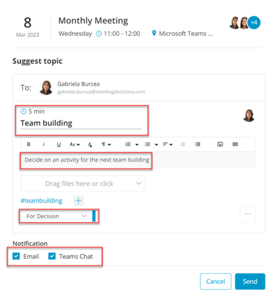
Suggest Topic:
As a meeting attendee, suggesting agenda topics ahead of time is useful because it helps ensure the meeting covers what you and the wider group actually need—not just what the organiser remembers or has time to add. It also lets you:
-
Get the right outcomes faster: Your topics can surface blockers, decisions, or approvals that would otherwise slip to “next time.”
-
Come prepared (and help others prepare): Adding your topic early gives everyone time to review context and documents, so discussion time is used well.
-
Reduce surprises in the meeting: Flagging items in advance avoids last-minute “by the way…” additions that derail timing.
-
Support governance and accountability: For more formal meetings (boards/committees), raising topics early helps ensure the right items are documented and addressed in line with standards.
-
Make your voice count: It’s a simple way to influence priorities and make sure your team’s needs are represented.
a. Via Teams chat:

b. Via email: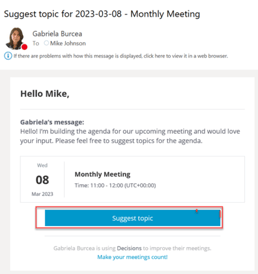
Review the Meeting Book:
Reviewing the Meeting Book ahead of time helps you get the full context in one place, so you don’t spend meeting time catching up. The Meeting Book is a single PDF that combines the agenda and all attachments, making it easy to scan the full pack, prepare questions, and flag gaps early. It is especially useful for formal meetings where decisions and approvals depend on complete, shared information.
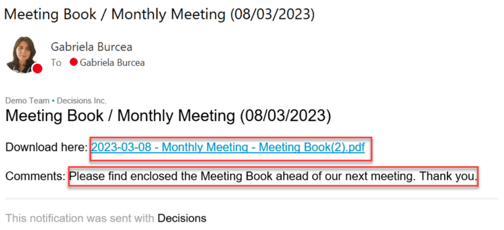
Note: Similar to the agenda attachments, it may be possible for you to make personal annotations on the Meeting Book.
Review minutes & make comments if needed:
Reviewing the minutes and adding comments (if needed) helps confirm the record is accurate before it’s shared or archived. It’s a quick way to validate key decisions, wording, and action items, clarify any ambiguity, and ensure the minutes meet governance or compliance expectations.
Consult the final meeting minutes:
The final minutes are the official record of the meeting. This document helps confirm what was decided, what you’re responsible for, and what happens next.
a. Shared by email:

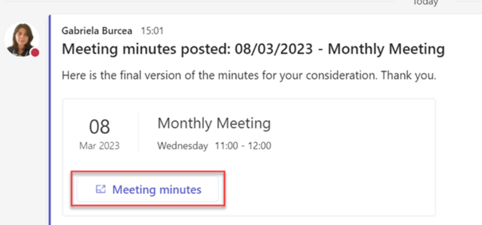
b. Shared by Teams chat:
Tip: Even if you’re not the organizer, you can still generate an AI Recap after the meeting. This is a quick way to capture the key decisions and discussion highlights for your own follow-up. It’s especially useful if you joined late, had to multitask, or need to brief someone who wasn’t in the room.
Follow-up on any assigned task:
Following up on any assigned tasks turns meeting outcomes into real progress. It helps you confirm priorities, unblock the team early, and build trust that actions agreed in the meeting are actually completed.
Use the Tasks app in Teams - Microsoft Support
Occasionally, you may be invited to attend only a part of a meeting managed using Decisions:
1. The calendar invite will reflect this:

2. So will the Decisions interface. Expect to see only this topic and not
the entire agenda:

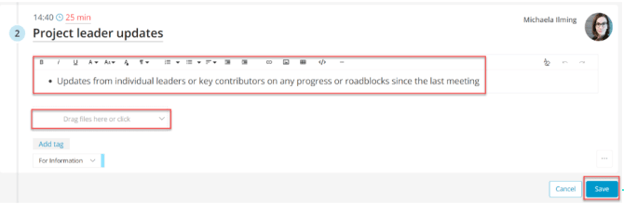
3. If you’ve been asked to upload supporting documentation or further details,
you will be able to edit the agenda item accordingly:

Ready to participate? Open the Decisions app in Microsoft Teams to review the agenda and meeting documents for your next meeting, so you come prepared.
Tip: As an attendee, you may find it easier to review the agenda and annotate supporting documents directly in the Decisions AI mobile app, available on both Android and iOS.